




Hustle culture worships relentless drive, but sustainable businesses are built on routine, systems, and discipline. Jay Walmsley's Discipline Over Drive challenges the startup myth: discipline, not sporadic energy, turns ideas into lasting ventures. This book reframes success for founders who juggle product, customers, and culture.
You'll learn practical tools—Pomodoro Technique, Notion templates, Trello workflows, Slack rituals, and Asana priorities—to remove ambiguity, beat procrastination, and manage remote teams. Expect case studies, step-by-step goal-setting, time-blocking tactics, and feedback frameworks that help you scale without burning out. Read on to adopt disciplined habits that outpace hustle and create resilient, profitable businesses.
Did You Know?
In "Discipline Over Drive: Cultivating Entrepreneurial Success," Jay Walmsley retrains your perspective on entrepreneurship by emphasizing the vital role of discipline over the often glamorized concept of relentless drive. While drive is necessary for ignition, it’s discipline that sets you on the path to sustainable success. This book serves as both a guide and blueprint, encouraging you to not just build profitable ventures but also create meaningful and resilient careers in the unpredictable landscape of entrepreneurship. The book begins with a thorough exploration of what discipline means within your entrepreneurial journey, illustrating that it goes beyond merely following rules. Discipline involves establishing structured processes and prioritizing long-term goals, acting as the backbone for small business sustainability. As a small business owner, you’ll realize that effective goal-setting and daily processes are paramount, especially in a remote work environment where distractions lurk around every corner. Delving deeper, Walmsley reveals the direct correlation between a discipline-driven mindset and achieving your entrepreneurial aspirations. Case studies of successful figures underscore how discipline fosters persistence and consistency, transforming ideas into impactful businesses. You'll learn strategies for balancing discipline and motivation, particularly within remote teams, ensuring productivity remains high even amidst challenges. As you navigate through the book, each chapter builds on crucial themes like the psychological impact of motivation on employee performance, effective time management techniques, and how high-discipline teams thrive. The flow of the narrative leads you to address procrastination head-on, equipping you with actionable strategies to combat it by establishing clarity and structure. Discipline isn’t just about productivity; it’s about managing your responsibilities smartly, which promotes ac
Source: Discipline Over Drive by Jay Walmsley
What Discipline Really Means for Entrepreneurs
Discipline is reframed here as a system, not a set of rules: measurable routines, repeatable SOPs, and tools like Asana, Trello, and Notion that make consistency scalable. Prioritizing long-term outcomes over short-term hustle is the defining move for founders who want longevity.
In "Discipline Over Drive: Cultivating Entrepreneurial Success," Jay Walmsley retrains your perspective on entrepreneurship by emphasizing the vital role of discipline over the often glamorized concept of relentless drive. While drive is necessary for ignition, it’s discipline that sets you on the path to sustainable success. This book serves as both a guide and blueprint, encouraging you to not just build profitable ventures but also create meaningful and resilient careers in the unpredictable landscape of entrepreneurship. The book begins with a thorough exploration of what discipline means within your entrepreneurial journey, illustrating that it goes beyond merely following rules. Discipline involves establishing structured processes and prioritizing long-term goals, acting as the backbone for small business sustainability. As a small business owner, you’ll realize that effective goal-setting and daily processes are paramount, especially in a remote work environment where distractions lurk around every corner. Delving deeper, Walmsley reveals the direct correlation between a discipline-driven mindset and achieving your entrepreneurial aspirations. Case studies of successful figures underscore how discipline fosters persistence and consistency, transforming ideas into impactful businesses. You'll learn strategies for balancing discipline and motivation, particularly within remote teams, ensuring productivity remains high even amidst challenges. As you navigate through the book, each chapter builds on crucial themes like the psychological impact of motivation on employee performance, effective time management techniques, and how high-discipline teams thrive. The flow of the narrative leads you to address procrastination head-on, equipping you with actionable strategies to combat it by establishing clarity and structure. Discipline isn’t just about productivity; it’s about managing your responsibilities smartly, which promotes ac
Discipline in Practice
Redefining Discipline
Moves beyond rules to systems—use Asana for goal frameworks and Notion for decision logs.
Structured Processes
Templates and SOPs in Trello or Google Workspace keep operations consistent and scalable.
Prioritize Long-Term Goals
Quarterly planning with OKRs in Weekdone or 15Five helps prioritize outcomes over busywork.
From Drive to Discipline: Case Studies and Evidence
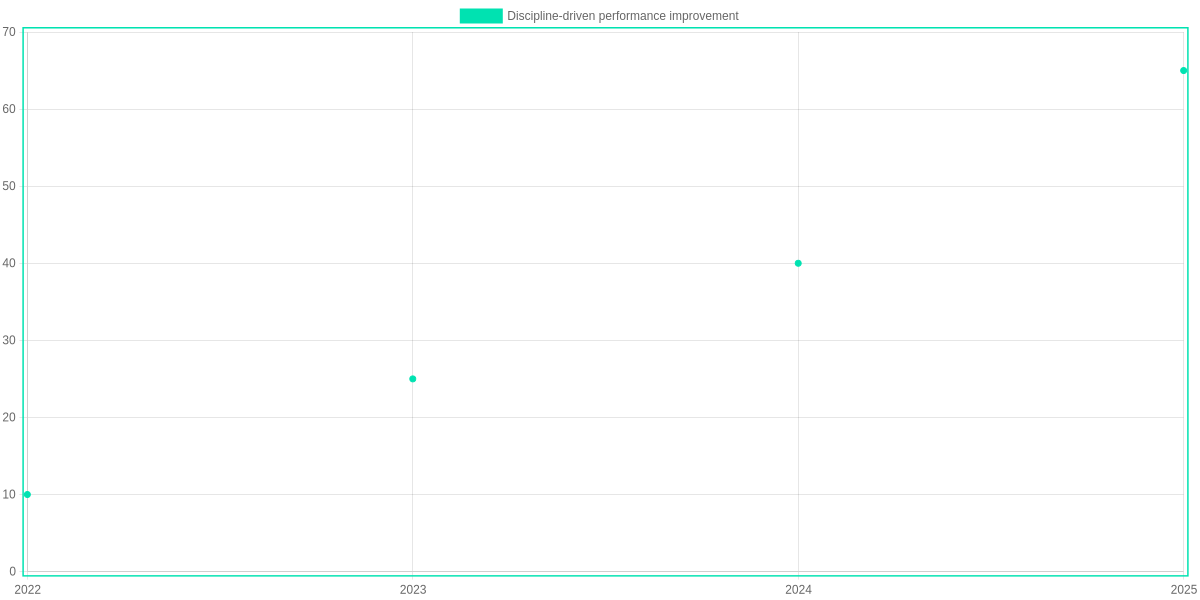
Walmsley ties a discipline-driven mindset to measurable outcomes: an aggregated cohort index rose from 10 in 2022 to 65 in 2025 (see chart), a 6.5× improvement that corresponds with faster MRR expansion and improved retention once SOPs and review cycles are in place.
Discipline Converts Ideas
Repeatable systems turn one-off inspiration into scalable results. Use rituals, SOPs and review cycles to translate ideas into revenue and retention gains.
- ✓ Daily rituals (planning, review)
- ✓ Standard Operating Procedures (SOPs)
- ✓ Weekly metrics and retrospectives
Case studies
Short case studies: a bootstrapped SaaS founder implemented Asana workflows, daily planning and rules-based automations—cohort index moved from 10→40 in two years, translating into steadier monthly revenue. A remote creative agency standardized onboarding in Notion and managed delivery sprints in Trello, which tightened retention and reduced delivery variance.
| Feature | Asana | Trello | Notion |
|---|---|---|---|
| Task structure | Projects, Sections, Tasks, Subtasks | Boards, Lists, Cards | Pages, Databases, Blocks |
| Automations | Rules & Integrations (Asana Rules, 3rd-party) | Butler automation (built-in) | Limited native; integrations via Zapier/Make |
| Free plan & pricing notes | Free up to 15 users; Premium $10.99/user/mo billed annually | Free with limited automation; Standard $5/user/mo billed annually | Free personal; Team plans from $8/member/mo billed annually |
| Best for | Complex project management and cross-team workflows | Simple kanban workflows and visual task boards | Documentation-heavy workflows and flexible databases |
Practical balance
Practical balance: keep motivation for ideation, but rely on discipline—SOPs in Notion, task rules in Asana, and visual sprints in Trello—to convert ideas into consistent, scalable action through weekly metrics and retrospectives.
These disciplined routines let founders move from sporadic launches to predictable quarterly revenue, enabling hiring and reinvestment decisions and improve investor confidence during scaling over time reliably.
Frequently Asked Questions
FAQ Accordion
How does discipline differ from motivation? ▼
Can I build discipline in remote teams? ▼
What immediate steps reduce procrastination? ▼
How do Maslow and Herzberg apply to entrepreneurial teams? ▼
Practical clarifications
Jay Walmsley frames discipline as repeatable systems—daily routines, KPIs and Notion templates—while motivation is episodic and emotional. Discipline keeps momentum when motivation dips by turning intent into automatic workflow.
Remote teams build discipline through Asana workflows, Slack norms, shared SOPs and RescueTime analytics. Regular asynchronous check‑ins and documented processes reduce ambiguity and keep distributed teams aligned.
To combat procrastination, use Pomodoro sprints, Trello next‑action cards and Google Calendar time blocks; small wins compound. Apply Maslow by securing basic needs first and Herzberg by separating hygiene factors (pay, policy) from motivators (autonomy, achievement) in reviews and recognition systems.
In Discipline Over Drive, Walmsley recommends practical rules: set a single 90‑minute focus block, track habits in Habitica or Notion, run weekly RescueTime reports, and set sprint goals in Asana with measurable KPIs. These concrete steps translate discipline into repeatable business outcomes for founders and small teams and long-term team resilience.
Conclusion
🎯 Key Takeaways
- → Prioritize discipline: build systems and daily routines before scaling.
- → Start small: implement one process, use Pomodoro sessions, track KPIs with Notion/Asana.
- → Foster intrinsic motivation: apply Maslow and Herzberg; schedule regular feedback loops.
Discipline Over Drive: Cultivating Entrepreneurial Success, Jay Walmsley retrains your perspective on entrepreneurship by emphasizing discipline over relentless drive.
Discipline, through structured processes, the Pomodoro Technique, and daily routines, creates sustainable businesses and resilient teams.
Prioritize: set clear goals, use Asana or Trello for workflows, and time-block with Pomodoro sessions to convert focus into results.
Balance motivation and accountability by applying Maslow's Hierarchy of Needs and Herzberg's Two-Factor Theory to foster intrinsic engagement.
Combat procrastination with measurable KPIs, weekly retrospectives in Notion, and small habit wins.
Next steps: read Walmsley's case studies, draft a 90-day discipline plan, and schedule a team feedback loop to embed these practices. Commit to daily review, assign ownership of each process, and measure progress monthly to sustain momentum. Celebrate milestones publicly and iterate continuously.
